
Montreal Is Voting on Foreign Policy. My Neighbourhood Has No Vote.
Twenty years after the demergers, it's worth asking who speaks for communities left outside city limits.
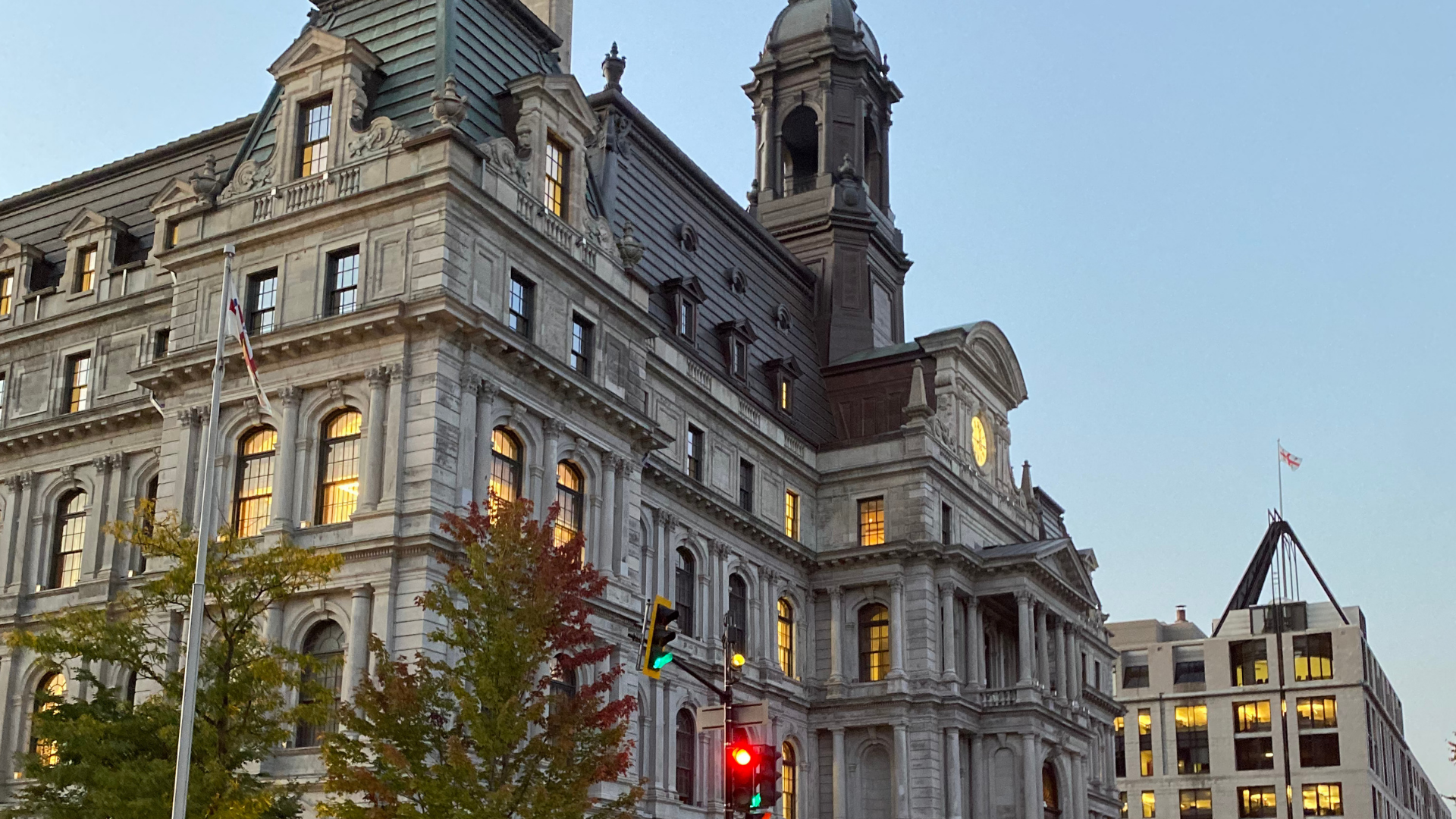
Montreal City Hall
Today, Montreal City Council will vote on a motion concerning Israel.
Not a single member casting that vote answers to me or my neighbours.
I have worked inside Montreal City Hall. I live in Côte-Saint-Luc, home to the largest concentration of Jewish residents in the Montreal region, more than half our population. For many of my neighbours, Israel is not a distant foreign policy question. Their children and grandchildren live there. Their families run to shelters when sirens sound. Behind those ties sits a history Jews cannot set aside: the knowledge of what happens when Jewish safety depends entirely on the protection of others.
Yet the council voting on Israel today was not elected by a single one of them.
Côte-Saint-Luc is not alone. Hampstead, Westmount and Dollard-des-Ormeaux all sit outside the City of Montreal's electoral boundaries and carry significant Jewish communities of their own. Hampstead and Côte-Saint-Luc are among the highest concentrations of Jewish residents in Canada.
This doesn't make today's vote illegitimate, and it doesn't diminish the Jewish Montrealers who do live inside the city and will be heard through it. But it exposes a democratic tension I can no longer set aside: when Montreal City Hall enters a debate like this one, whose voice actually reaches the table?
That question outlasts today's motion. It shows up whenever the consequences of a decision cross municipal boundaries but the vote that makes it doesn't: policing and public security decisions in NDG that land on Côte-Saint-Luc, the decades-long standoff over the Cavendish extension, where mobility and congestion decisions ignore the map entirely. Different issues. Same structural gap.
We share services, infrastructure and institutions across this island. We work in Montreal, build businesses in Montreal, participate in its civic life. The governments we elect don't always align with the consequences we live.
I value the autonomy Côte-Saint-Luc regained through the demergers, and I don't want to undo it. But autonomy and meaningful representation aren't supposed to be opposing principles.
Twenty years ago, the demergers answered one democratic question: how do communities regain control over their own affairs. They left a second question unfinished: how do those same communities get a real voice in the metropolitan institutions and decisions they continue to share.
Quebec should launch an independent review of Montreal's agglomeration model: its representation, its accountability, its taxation and voting structure, its division of powers. Not to relitigate the demergers. Not to predetermine an outcome. Because twenty years is long enough to ask whether the compromise still fits the city we've become.
Healthy democracies aren't afraid to examine whether their institutions still reflect the people they serve.
Today's vote didn't create this question, it made it impossible to keep ignoring.
Twenty years after the demergers, the unfinished work may not be autonomy anymore.
It may be representation.
